The question
The Fashion Transparency Index measures what brands say about their practices. Good On You independently rates what they do for people, planet, and animals. Does one predict the other?
Approach
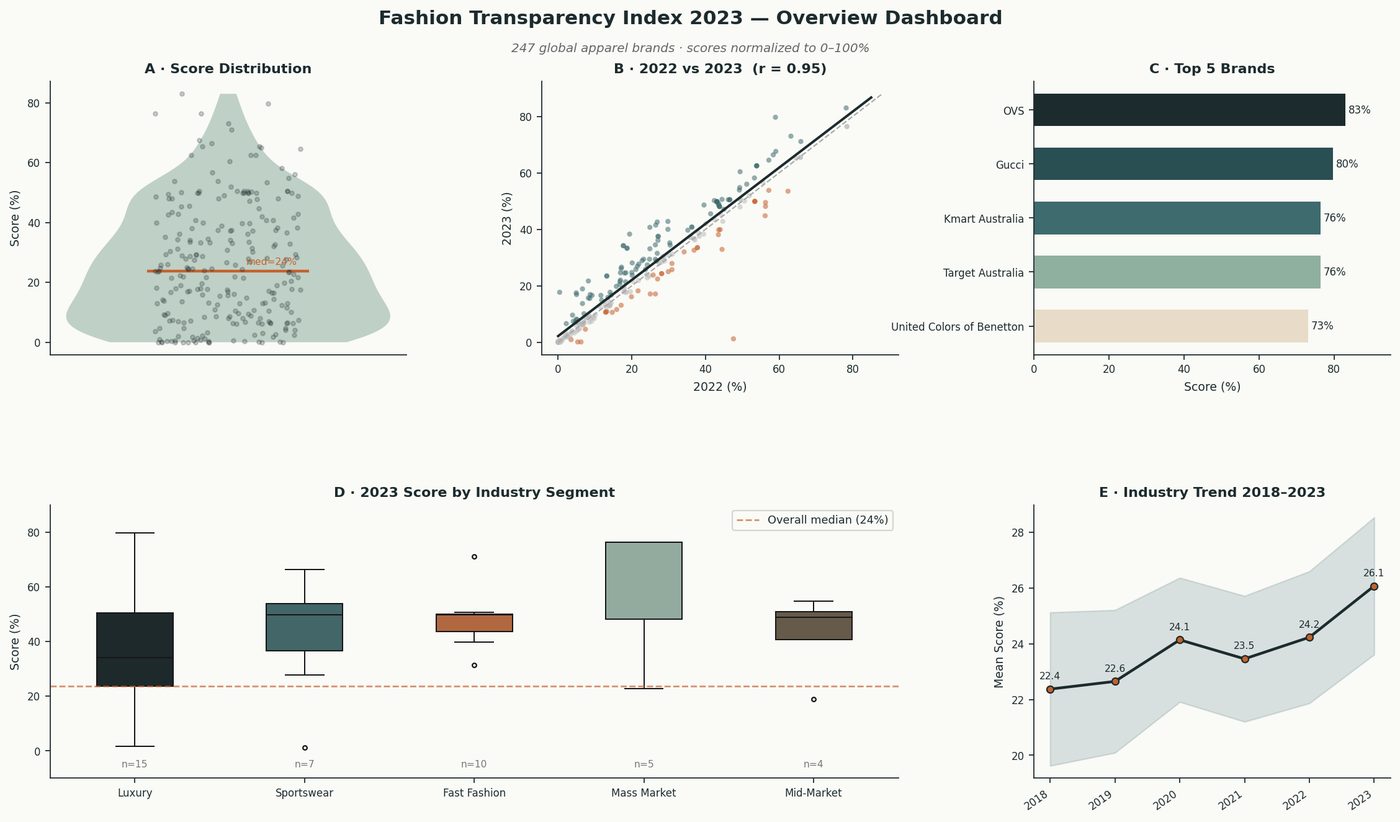
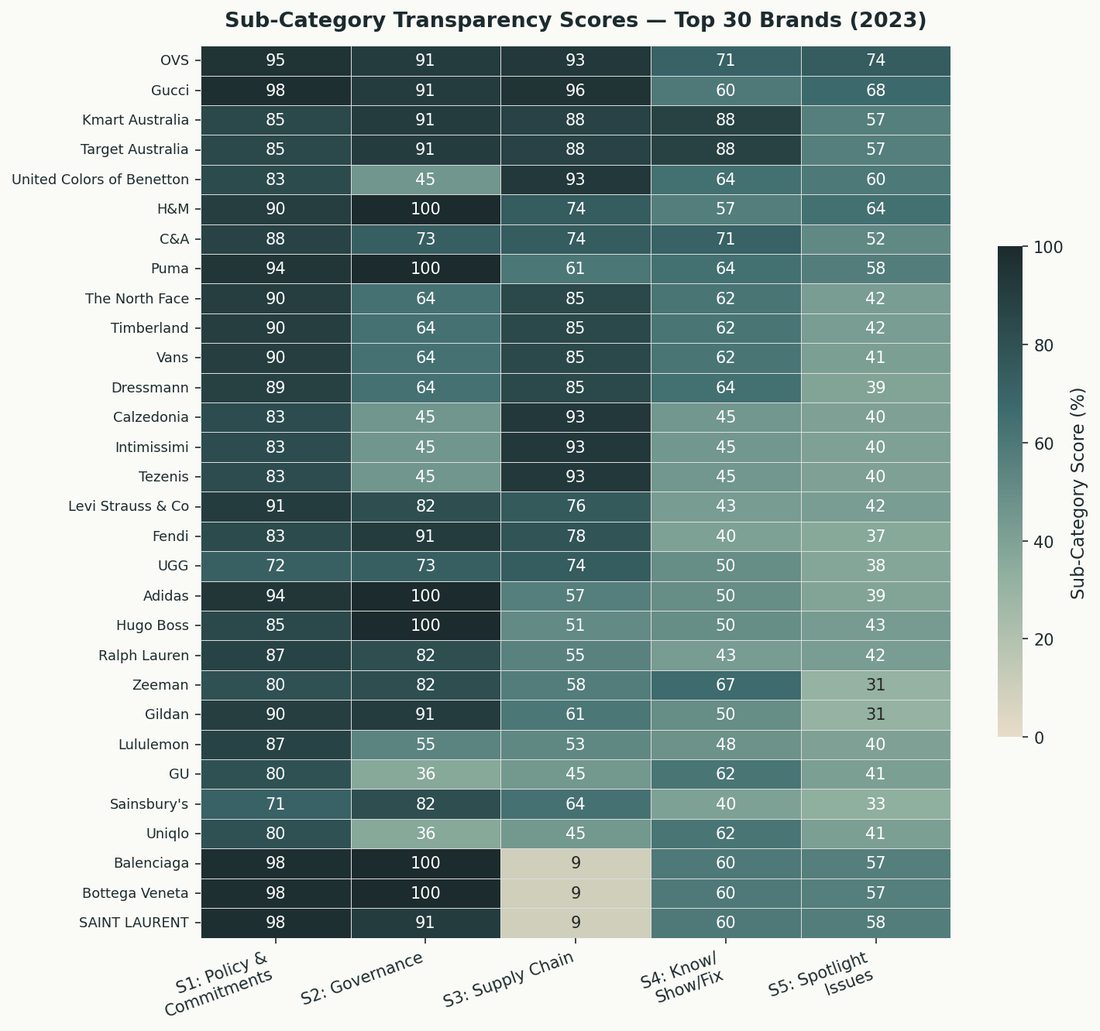
Part 1 is an exploratory analysis of the 2023 Transparency Index: score distributions, year-over-year change, industry segments, and sub-category scores. Part 2 merges the 49 brands that appear in both indexes to test whether disclosure tracks independently rated behavior.
What I found
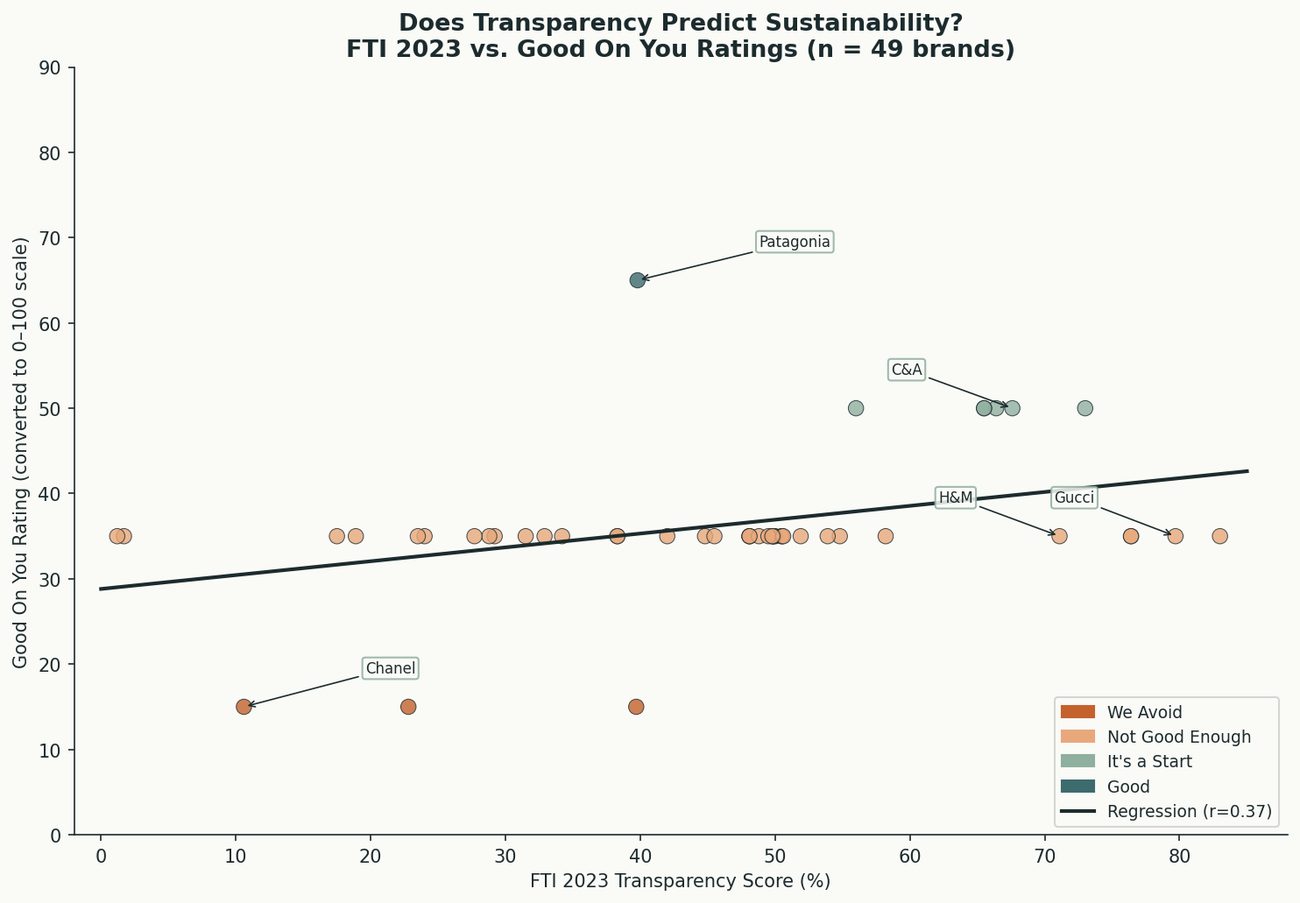
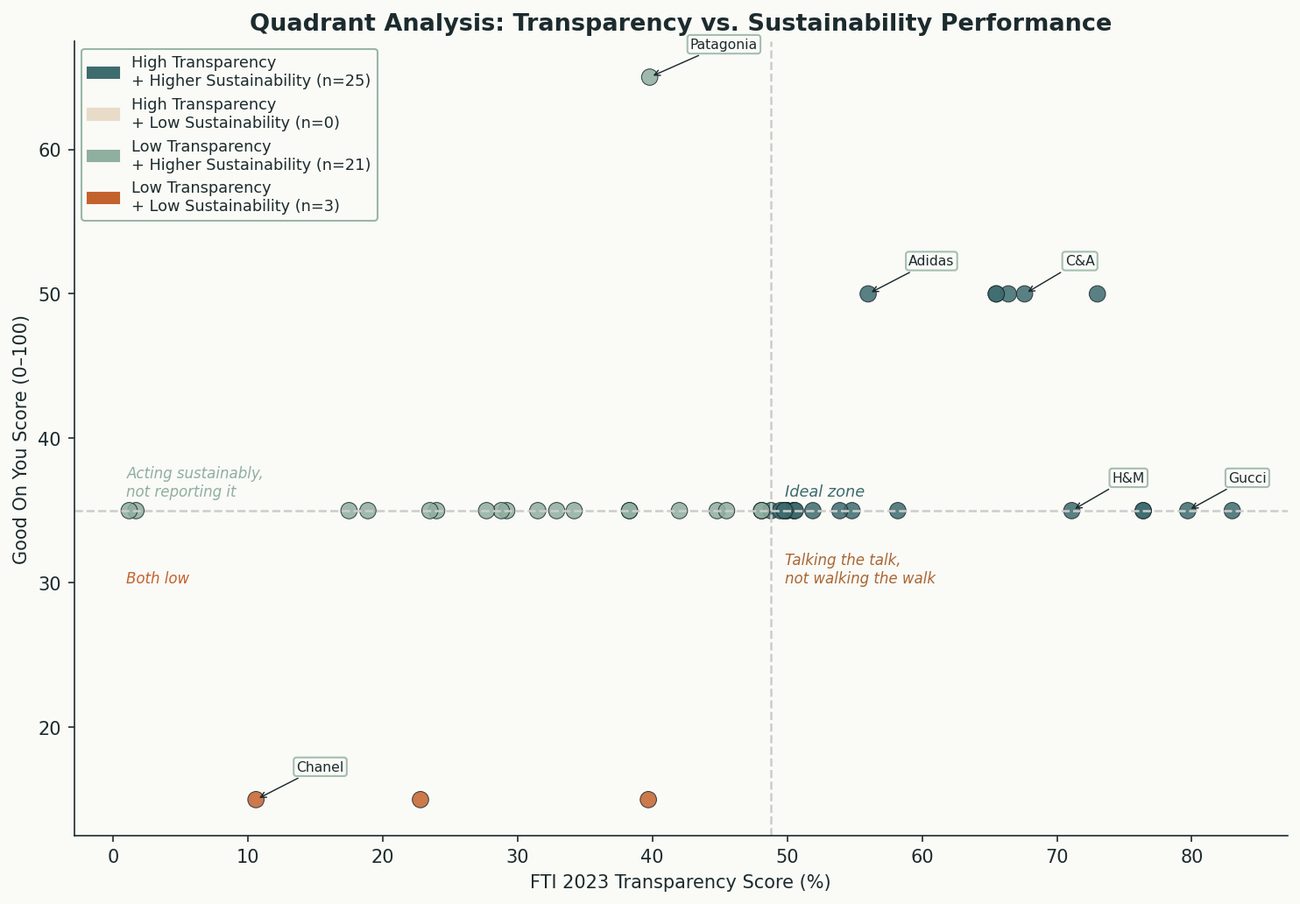
Transparency and sustainability are related, but weakly: r = 0.37, meaning disclosure explains only about 14% of the variation in actual performance. A brand can score 80% on transparency and still be rated "Not Good Enough."
Responsible AI check
Weak is reported as weak. r = 0.37 is a real relationship but a modest one, and the write-up leads with the 14% of variance explained rather than the fact that a correlation exists.
Data quality first. I found and corrected a normalization error present in earlier public analyses of this data before drawing conclusions.
Stated limits. Only 49 brands appear in both indexes, and both are third-party ratings with their own methodologies, so this is evidence about disclosure, not a verdict on any single brand.