The problem
Denver publishes 311 requests (potholes, graffiti, illegal dumping, snow removal) as a rolling 12-month feed. It's useful data that is awkward to work with.
The API silently truncates any query past its record cap. Timestamps arrive as epoch milliseconds. Records age out of the window, so there's no history for questions like "has pothole response time improved year over year?" And with no change-data-capture, a naive re-pull double-counts updated requests.
Architecture
Ingest
Paged extract with a watermark, landed to S3 as gzip NDJSON
Process
PySpark cleans, casts, dedups, and derives resolution hours and SLA flags
Validate
Null, range, and schema-drift checks gate the load
Warehouse
Postgres star schema with agency, service, neighborhood, and date dimensions
Serve
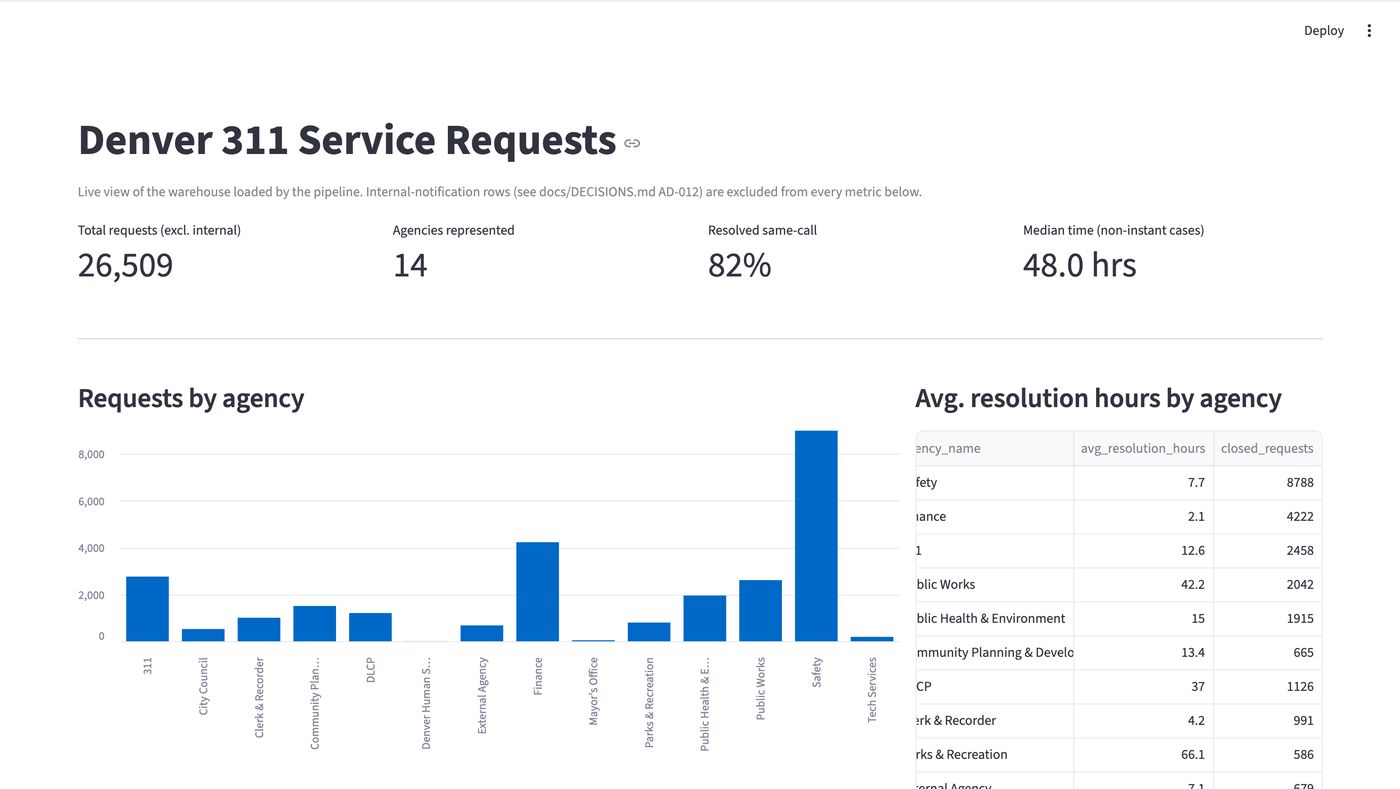
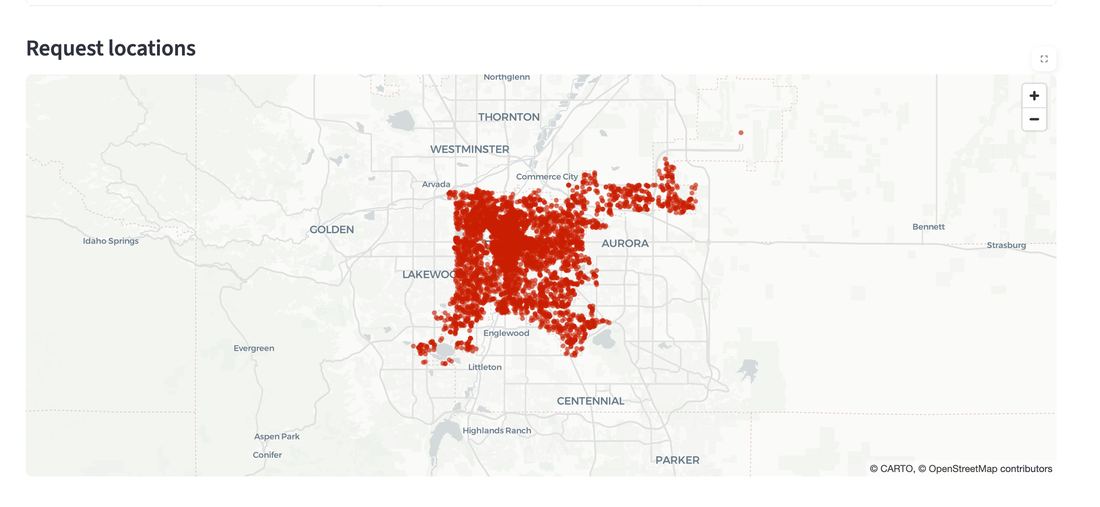
Dashboard on the fact table, all scheduled by Airflow
Key design decisions
Raw data is immutable NDJSON
Raw stays a faithful copy of the API. NDJSON absorbs new fields without breaking; Parquet starts at the Spark output.
The watermark lives in S3
It survives Airflow rebuilds and backfills run outside Airflow, at the cost of one small JSON object.
At-least-once delivery
The watermark advances only after every file is durably written. Dedup on case number makes replays safe.
The endpoint is discovered
A stable dataset ID resolves to the live query URL at runtime, so a source migration doesn’t break the pipeline.
Responsible AI check
Bad data never loads. Quality gates check nulls, ranges, and schema drift before the warehouse load, and a failed check fails the whole run rather than letting questionable numbers reach a dashboard.
Count the cost. At Denver’s data volume, DuckDB or pandas would be faster and cheaper than Spark. The README says so plainly: Spark is there because the pattern scales, not because this volume needs it.
Stated limits. A single timestamp watermark misses records updated after creation, and a hard quality gate would become an outage risk across many sources. The README documents what would replace each piece at scale.